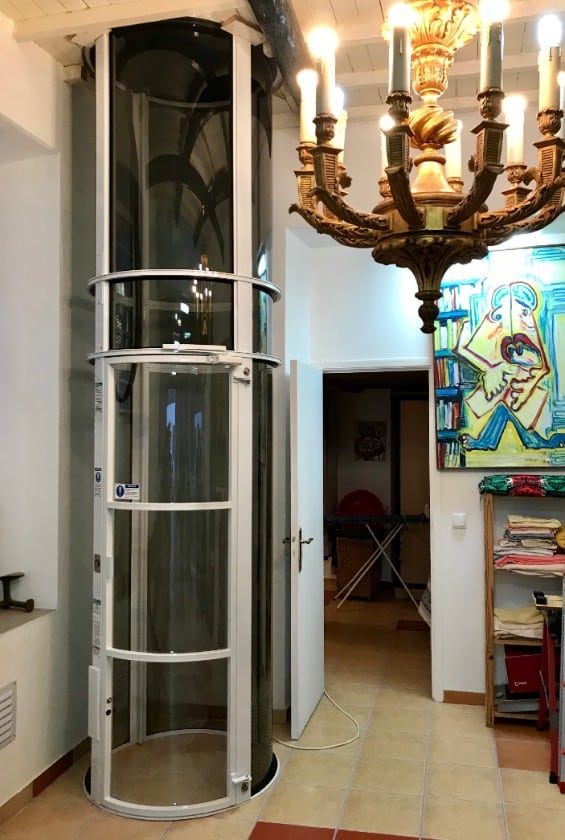
A home lift is a significant investment, and understanding the price involves more than comparing equipment specifications. The lift itself, preparation of the property, installation and continued maintenance all contribute to what you will spend.
For an initial budget, compact domestic lift projects commonly sit within the mid-to-high teens in thousands of pounds. Larger accessible systems and more extensive installations can cost considerably more. The right figure for your home depends on the equipment you need and the work required to accommodate it.
DHG Services helps homeowners assess suitable options through a free home survey. This article explains how to approach the budget, interpret advertised prices and compare complete installation proposals.
What Is a Realistic Budget for a Home Lift?
The following figures provide broad planning allowances for different domestic lift projects. They are not fixed quotations, and the VAT treatment, building work and equipment specification must be confirmed for your individual installation.
| Home lift arrangement | Indicative project budget |
|---|---|
| Compact through-floor lift | Approximately £16,000–£20,000 |
| Larger wheelchair-accessible lift | Approximately £20,000–£30,000 or more |
| Premium enclosed domestic lift | Approximately £25,000–£35,000 or more |
| Bespoke installation serving several floors | Individually assessed and quoted |
These categories overlap because capacity, configuration and property preparation affect the price. A straightforward installation of a larger model may involve different work from placing a compact lift in a more challenging location.
Published manufacturer prices offer another useful reference. For example, Stiltz advertises home lifts from £17,000 excluding VAT, including the lift, delivery, professional installation and a 12-month warranty. The agreed building scope and any non-standard work still need to be established for the property.
An advertised starting price helps you begin the conversation. A surveyed quotation establishes what the proposed project will actually cost.
Why the Type of Home Lift Changes the Price
Domestic lifts serve different purposes, so comparing them solely by price can overlook important differences in access and installation.
Compact Through-Floor Lifts
A through-floor lift travels through a prepared opening between levels. Compact models can provide an option for someone who needs easier access upstairs without the internal space required for a larger cabin.
The proposed location must work on both floors. Room layout, ceiling clearance and the approach to each entrance all need consideration before selecting equipment.
Wheelchair-Accessible Models
A wheelchair-accessible lift needs to accommodate the actual wheelchair and user, including their combined weight. The specification should also establish whether an accompanying person will travel inside.
Door arrangements and manoeuvring space matter alongside the platform or cabin dimensions. A cheaper model offers little value if entering or leaving it is difficult.
Enclosed and Multi-Level Lifts
Some domestic systems offer additional stopping points, entrance configurations and finish choices. Serving more levels involves additional equipment and installation requirements.
Aritco identifies model size, number of floors, design choices and installation conditions among the principal factors affecting its home lift prices. This illustrates why a two-stop compact lift and a larger customised installation need separate budgets.
How Your Property Affects the Installation Cost
The same lift model can lead to different project costs in two homes. Its position determines what preparation is needed and how the installation connects with existing rooms.
A suitable opening may need to be formed between floors. The survey should establish the construction involved and whether further assessment or supporting work is required. Existing pipes, wiring or other services can also influence the proposed route.
Access around the lift deserves equal attention. A position that accommodates the equipment downstairs may create difficulties upstairs if it opens into a restricted space. Assessing both levels early helps avoid choosing a location that later requires additional alterations.
Finish requirements also affect the budget. Ask how ceilings, flooring, wall surfaces and adjoining decoration will be left after installation. “Making good” should be described clearly enough for you to understand the expected result.
Where several trades are involved, establish who coordinates their work. A single project quotation may include preparation and fitting, while another proposal may require you to arrange associated work separately.
What Should a Home Lift Quotation Explain?
A useful quotation should allow you to understand both the equipment being supplied and the completed installation you are purchasing.
It should identify the manufacturer and model, dimensions, capacity, travel arrangement and entrances. Any optional features should be distinguishable from those necessary to meet the user’s requirements.
The installation scope should explain delivery, preparation, fitting, electrical arrangements, testing and handover. Confirm responsibility for any associated professional advice, applications or inspections identified for the project.
Exclusions are equally important. If decoration, flooring repairs or service relocation are outside the price, ask how those costs will be established. An allowance for work that has not yet been fully assessed is different from an agreed fixed cost.
Review the payment schedule and quotation validity too. Understand when payments become due and how changes to the agreed specification would be handled.
Comparing two proposals becomes much easier when each describes the same intended outcome. A lower figure may reflect a smaller scope rather than a saving on an equivalent installation.
Budget for Maintenance and Everyday Running Costs
The purchase price is only part of the cost of owning a domestic lift. Before ordering, ask for the maintenance requirements and the current cost of suitable servicing arrangements.
The interval should follow the manufacturer’s guidance and any applicable warranty conditions. Ask whether a service plan includes replacement parts, attendance for faults or only scheduled maintenance. These differences affect how much additional expenditure you may face.
Electricity costs depend on the model, frequency of travel, standby consumption and your tariff. Request information relevant to the proposed equipment rather than relying on a general comparison with another household appliance.
Some installations may include communication equipment or other features with ongoing charges. Confirm whether these apply and who provides the associated service.
A useful budget therefore separates the initial installation from scheduled maintenance, energy use and repairs outside the applicable cover. You can then judge whether the proposal remains affordable beyond the fitting appointment.
Does a Home Lift Qualify for VAT Relief?
VAT can make a substantial difference to the final bill, so establish the treatment of the proposed supply before comparing totals.
Government guidance confirms that qualifying lift installation work can be VAT-free where the lift helps a disabled person move between floors of their home. Relief can also cover qualifying repairs, maintenance and directly related preparation or restoration work. The relevant conditions must be met.
Do not assume that every home lift purchase automatically qualifies or that the same treatment applies to unrelated renovation work. Ask the supplier to explain the VAT shown against the proposal and any eligibility declaration required.
The GOV.UK guidance on VAT relief for building work explains the conditions. Check these before committing to a budget based on an advertised price excluding VAT.
Can Funding Help with the Cost?
Financial assistance may be available where a lift forms part of an assessed adaptation need.
In England and Wales, a Disabled Facilities Grant can help eligible applicants fund necessary home adaptations. Northern Ireland has a separate application route, while Scotland uses different arrangements. The appropriate support depends on where you live and your circumstances.
Start with your local council or the relevant housing adaptation service. An assessment helps establish which changes are needed and whether the proposed work is suitable for the property.
If you intend to seek grant funding, contact the authority before ordering equipment or starting work. Government guidance warns that work begun before an application is approved will not usually receive a grant.
The Disabled Facilities Grant information on GOV.UK provides a starting point. Treat potential funding separately from confirmed funding when planning what you can afford.
Would a Stairlift Meet Your Needs at a Lower Cost?
A stairlift generally involves a lower initial investment than a home lift, but the comparison needs to begin with suitability.
Someone who can transfer comfortably to a stairlift seat may find it provides the access they need. A wheelchair user who needs to remain in their chair during travel may require a different arrangement.
Consider how the person approaches the equipment, operates it and leaves it at the destination. The effect on other household members and circulation space also matters.
For customers considering stairlifts in Nottingham, DHG Services can discuss staircase-based options alongside wider home access requirements. Comparing suitable solutions helps you understand whether the additional expenditure on a home lift delivers benefits that matter to your household.
Get a Home Lift Price Based on Your Property
An accurate budget starts with a clear description of what you need. Explain which floors you want to connect, who will use the equipment and whether a wheelchair or accompanying person must be accommodated.
During a survey, you can discuss possible positions, installation requirements and features that support everyday use. Our experienced team can explain suitable options and provide a written proposal for consideration.
Review the complete scope, VAT treatment, warranty and maintenance arrangements together. This gives you a more useful basis for deciding than the headline equipment price alone.
Arrange a free home survey with DHG Services to discuss a domestic lift and establish a quotation for your home.