Finding an affordable home lift starts with understanding what your property and the people using it actually need. A compact lift for someone who can stand comfortably has different requirements from a lift carrying a wheelchair between three floors. Comparing their advertised prices without considering those differences can lead to choosing equipment that does not solve the accessibility problem.
The most useful comparison is between complete installation proposals for lifts that meet the same requirements. The purchase price matters, but so do building work, usable space, servicing and the support available after installation. At DHG Services, the starting point is identifying a suitable access solution so that your budget goes towards features that make everyday life easier.
Start by Defining What the Lift Must Do
Before comparing prices, establish who will use the lift, which floors it must serve and how they will enter and leave it. Consider whether the user will stand, sit on an integrated seat or remain in a wheelchair. If wheelchair access is required, the assessment should account for the actual chair’s dimensions, the combined load and the space needed to approach the entrance. A lift described as accessible may still be unsuitable for a particular wheelchair or room layout.
Think about likely future requirements as well as current mobility. For example, a smaller lift might meet today’s needs but offer insufficient space if a walking aid or wheelchair becomes necessary. Future needs cannot always be predicted, but discussing them before choosing a model helps avoid spending money on an installation that could quickly become restrictive. Our home lift comparison guide explains the different options and the property considerations that influence their suitability.
Understand What an Advertised Starting Price Includes
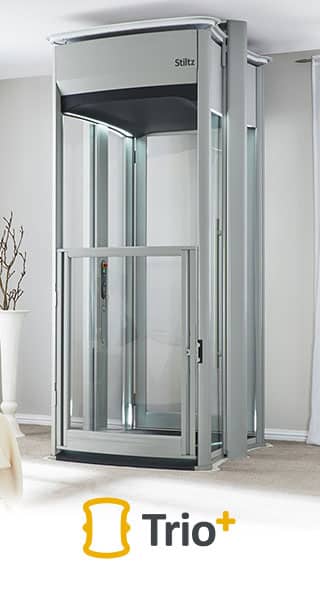
A starting price gives you an initial reference point, but it does not establish the final cost for your home. Manufacturers and installers may present their prices differently, particularly where structural preparation, electrical work and finishing are concerned. As one manufacturer example, Stiltz currently advertises home lifts from £17,000 excluding VAT. That figure is not a DHG Services quotation, and the work included in a proposal for your property needs to be confirmed.
When reviewing an advertised offer, check the model, number of stops, standard specification and installation assumptions behind it. Ask whether delivery, preparation of the floor opening, electrical alterations, decoration and removal of waste are included. A lower headline price can become a higher overall bill if several necessary tasks are charged separately, while a more comprehensive quotation may give you a clearer picture of the actual spending required.
Choose the Simplest Suitable Installation
The lift’s position can have a substantial effect on the work needed. A location with a practical route between floors may require fewer alterations than one affected by awkward structural arrangements, services or restricted access. However, the cheapest position to build is only useful if the person using the lift can reach it comfortably and leave it safely on each floor. Saving on construction should not create a difficult journey through the house.
A property survey allows the installer to assess possible locations and explain their implications. It should consider the floor structure, available headroom, approach space, door openings and any services that might need moving. Ask to compare more than one position where the layout allows it, including the impact on furniture and everyday use of the rooms. Our guide to what to ask before installing a home lift can help you prepare for that discussion.
Compare Written Quotes on the Same Basis
Request a written breakdown that separates the lift equipment from installation and associated building work. The proposal should identify the exact model and configuration, its rated capacity, the floors served and the agreed accessibility features. It should also explain who will arrange each part of the work, including any necessary building control involvement, and which tasks remain your responsibility.
For a meaningful comparison, give each installer the same requirements and check their exclusions carefully. One proposal might include preparation and making good, while another expects you to arrange a builder. Differences in warranty coverage, handover, servicing arrangements and call-out charges also affect value. Where an allowance is provisional, ask what could change it and when the final amount will be confirmed.
Save on Optional Finishes, Not Essential Access Features
Decorative choices can offer opportunities to control spending. Depending on the product, standard colours, finishes and lighting may cost less than bespoke options. If the main objective is reliable movement between floors, keeping the appearance straightforward can help direct more of the budget towards a suitable lift, properly completed building work and dependable aftercare.
Accessibility features need a different assessment. A powered door, particular control position or additional space might be essential for one user even if another person could manage without it. Ask the installer to explain which features are necessary for the intended user and which are mainly preferences. This gives you a practical basis for reducing the specification without making the lift harder to operate.
Check Quality Through Evidence and Aftercare
Quality is difficult to judge from photographs or a list of features alone. Ask the supplier to explain the lift’s intended use, the applicable safety requirements and the checks completed before handover. You should understand how the controls work, what happens if travel is interrupted and which emergency procedures apply to the selected model. These details are more useful than broad descriptions such as “premium” or “maintenance-free”.
Aftercare also deserves attention before you commit. Find out who will service the lift, whether they support that particular model and how repairs are arranged. Read the warranty terms to establish what is covered and whether labour, travel or particular components are excluded. Clear operating instructions, accessible support and a properly documented handover all contribute to an installation you can use with confidence.
Budget for the Years After Installation
The initial installation is only part of the financial commitment. Ask for the manufacturer’s recommended servicing schedule and the current cost of the proposed service arrangement. Establish whether call-outs and replacement parts are included, how out-of-hours assistance is handled and whether the installer offers support in your area. Avoid assuming that a warranty and a servicing agreement provide the same cover.
Electricity use, wear-related replacements and future repairs should also be considered, although their costs depend on the equipment and how it is used. A slightly higher purchase price may be worthwhile if it comes with more suitable equipment or stronger support, but that judgement should be based on clear terms. Our guide to how long a home lift lasts explores the factors that affect its working life.
Confirm VAT Treatment and Explore Possible Funding
Check whether every price you receive includes VAT and ask the supplier to confirm the treatment that applies to your circumstances. HMRC’s guidance on VAT relief for disabled and older people includes provisions for qualifying lift installations. Eligibility depends on the relevant conditions; it should not be assumed simply because the equipment is installed in a home or the buyer is older.
If funding could influence your decision, investigate it before placing an order or starting work. Speak to the appropriate local authority about the assessment and approval process, and establish whether the proposed adaptation could qualify. Our home adaptation grants guide provides a starting point. Potential assistance should be treated as something to confirm, rather than money already available towards the installation.
Consider Whether a Stairlift Meets Your Needs
A home lift is not the only way to improve access between floors. If the user can transfer safely onto a seat and the staircase is suitable, a stairlift may provide a more affordable solution with different installation requirements. However, it will not meet the same needs as a lift for someone who must remain in their wheelchair, and the ability to transfer comfortably needs careful consideration.
Comparing these options can help establish where your budget will achieve the greatest improvement. For households exploring stairlifts in Staffordshire, the assessment should cover the staircase, available space and the user’s practical requirements. The right choice depends on how the equipment will be used each day, rather than the purchase price alone.
Find an Affordable Lift That Fits Your Home
An affordable home lift should provide the access you need at a clearly explained cost. Start with a property assessment, compare suitable configurations and check the complete installation scope. Keep optional finishes within budget, while retaining the space, controls and features necessary for the person using the lift.
To discuss your property and compare appropriate options, contact DHG Services. A detailed assessment can help you understand the work involved and make an informed decision about where to spend and where you can reasonably save.